![The Real Benefits of Hydrogen Water [Studies + Scientific Review]](http://echowater.com/cdn/shop/articles/Echo_5399_39d36eb6-ec9e-4530-b08b-ab085b2c18eb.webp?v=1772237447&width=1200)
The Real Benefits of Hydrogen Water [Studies + Scientific Review]
We all know that drinking water regularly is one of the healthiest things we can do for ourselves. After all, about 60% of our bodies are made up of the wet stuff.
Researchers have been studying whether drinking hydrogen rich water has additional effects on the body.
The idea is that adding hydrogen molecules may support your body's antioxidant capacity and help with oxidative stress. We realize that sentence sounded like a bunch of health buzzwords, but there is real meaning to it. Let us explain.
What Is Molecular Hydrogen?
Before we go into what the research says about hydrogen water, let's talk about what molecular hydrogen is in the first place.
Molecular hydrogen is the smallest molecule in the world. Okay, that's an understatement. It's the smallest in the ENTIRE UNIVERSE! It's also the most abundant that exists. About 75% of the universe's entire mass is hydrogen.

To give you an idea just how much hydrogen there is, take a look at the photo above. This is a section of space that was taken by the Hubble Space Telescope. Every single light you see isn't just one star. It is an entire galaxy, made up of over 100 billion stars --- many of them are just as big as our sun or even bigger.
Out of everything you see in this photo, about two-thirds of it is hydrogen. That is a mind-boggling amount, especially when you take into consideration the fact that this photo is just a small part of the entire universe.
Why Is Molecular Hydrogen So Small?
Molecular hydrogen is made up of of just two of the smallest and simplest atoms that exist. Check out this visual of some of hydrogen's chemical properties.

To understand what this means, you first need to know that atoms are made up of three things:
- positively charged protons
- negatively charged electrons
- neutrally charged neutrons
The number at the top corresponds with the number of protons the atom has, and every single atom (up to 118) has a different number. For hydrogen, that means it has one proton, and in order for the atom to be neutrally charged, it has to have the same amount of electrons.
To understand how many neutrons an element has, you subtract the chemical weight (the 1.01 at the bottom) from the amount of protons. For the purposes of simplicity, we'll ignore the decimal, and round it down to zero. There are zero neutrons in a hydrogen atom.
The next biggest element is helium. It has two protons, and two neutrons. This means it's four times more massive than a single hydrogen atom.

Now, when you find hydrogen gas in the wild, it is always made up of two hydrogen atoms bonded together as a hydrogen molecule. Even though this doubles the size of the hydrogen, it's still two-times less massive than one helium atom. No other molecule --- made up of multiple elements --- can ever be as tiny.
Being so small has it's advantages. Hydrogen molecules can penetrate into your cells very easily. For any other molecule, this would be scary, but hydrogen is non-toxic at the levels found in hydrogen water. Its tiny size is one reason researchers are interested in it.
Research Area 1: Hydrogen and Oxidative Stress
In lab studies, the molecules you'll find in hydrogen rich water have antioxidant properties, and they're selective about which molecules they target.
Okay, so let's back up here and explain what oxidative stress is. It's when your body doesn't have the right balance of free radicals and antioxidants. If you don't know what those are, give us a little time to explain.
What Are Antioxidants and Free Radicals?
There is a constant fight going on in your body between two tiny molecules. Unlike this photo, none of them are alive enough to actually throw punches. The fight is all about chemical reactions.

On one end of the ring, you have unstable molecules called free radicals. The ones that cause oxidative stress are known as reactive oxygen species or ROS. They are missing an electron, and they are looking for another. In order to stabilize, they'll tear apart a nearby molecule and bond with one of the atoms that made it up.
Now, you have a stable molecule and a damaged one, which has become a free radical. The new free radical will tear apart another molecule, and so on, and so on.
The problem with this process is a lot of these molecules are building blocks of your cells. It is often a necessary process. But if left unchecked, your body can be put into oxidative stress, which is linked to the aging process, along with other diseases.
On the other side of the ring...
You have antioxidants! These are molecules that enter your cells and donate an electron to the havoc-causing free radicals.
So antioxidants aren't so much like a boxer who is knocking out his opponent. They're more like a really nice gentleman who gave a big hairy monster a Snickers bar to satisfy its cravings.
The Main Problem With Antioxidants
So should you just take antioxidant supplements? Well you can, but there is a big problem with antioxidants themselves, which researchers think hydrogen may avoid. While they do stabilize the harmful free radicals, they'll sometimes also target the ones that are good for you.
That's right, we said it. There are good free radicals out there because the body is way too complicated for its own good. They are used for various cellular processes that are important for your body including differentiation --- where the cells are assigned a specific role --- and an essential programmed cell death called apoptosis.
And That's Where Hydrogen Comes In
In lab studies, hydrogen acts as an antioxidant, and as we said before, it's selective. It goes after especially cytotoxic oxygen radicals (that means they're bad for you) like hydroxyl, and it leaves the "good" ones alone that your body needs.
The effect of hydrogen on oxidative stress doesn't stop at its direct antioxidant effect. It also has also been shown to have signaling effects. In very simple terms, it triggers processes that help mitigate oxidative stress.
Why This Matters
Oxidative stress is the thread that connects the other research areas in this article, because it's linked to so many processes in the body.
Research Area 2: Blood Sugar in Diabetic Rats
Diabetes is a condition where you don't have enough of a hormone called insulin, which is essential in regulating the amount of sugar in your blood. It brings the glucose from your bloodstream into your cells, which convert it to energy. If you don't have enough insulin, you end up with a buildup of sugar in your blood.
Oxidative stress is a big factor in diabetes, and a group of Indonesian scientists wanted to see how drinking hydrogen rich water affected diabetic rats. In 2021, they published a study, where they looked at glucose levels themselves, and in 2022, they published another that looked at insulin levels.
For both studies, they looked at rats. They randomly separated the animals into five different groups including one with "normal" rats and four with diabetic ones. For the diabetic rats, they induced the condition using an anti-cancer drug called streptozocin, and the rats were put on a high-fat diet.
When the animals were considered diabetic, they were given treatments over 14 days. The exact treatment varied depending on the group. There was a normal group without diabetes that didn't receive treatment, a diabetic control group that also didn't get treatment, a diabetic group that was given metformin (a drug that helps your body's response to insulin), a diabetic group that was given metformin plus hydrogen rich water, and a group that was only given hydrogen water.
The day after the last treatment, the rats were euthanized, and their bodies were observed. In the first study, scientists found that the rats' glucose levels decreased when given hydrogen rich water in comparison with the diabetic control group.
The second study revealed that the insulin levels increased along with levels of an antioxidant enzyme called superoxide dismutase (SOD). They also reported no significant difference between the hydrogen water and metformin groups in these rats. That's an animal result; it doesn't mean hydrogen water can replace diabetes medication, and people with diabetes should follow their doctor's treatment plan.
Research Area 3: Weight and Metabolic Health
We wish we could tell you that if you struggle with obesity, you can lose a ton of weight by just drinking hydrogen water. But we don't have enough information to tell you that with confidence.
A lot of research still needs to be done for us to definitively say that hydrogen water can do that. However, a few early studies have looked at hydrogen water and markers related to weight and metabolism.
Drinking Hydrogen Water And Hunger Suppression
A 2023 study looked at whether hydrogen water affects brain chemicals related to hunger in overweight adults.
Participants drank hydrogen water every day for 12 weeks. Researchers used a tool called magnetic resonance spectroscopy to look at various levels of a type of chemical in their body called neurotransmitters, which sends signals throughout your body.
They found that when the participants drank hydrogen water, they had lower levels of certain neurotransmitters that stimulate hunger. It's an interesting finding, but it doesn't show that hydrogen water reduces appetite or overeating.
The researchers acknowledged that this study had some pretty big limitations, namely in its size. It only had five participants, and this was mostly because of budget constraints. This was intended as a pilot study, which means it's the type of thing that other researchers can use as a basis for even bigger studies that can give a better idea of how it all works.
A 24-Week Study in People With Metabolic Syndrome
The National Institutes of Health defines metabolic syndrome as a group of conditions that increase your risk of serious, often deadly, health problems including diabetes, stroke, and coronary heart disease. The conditions are often associated with obesity such as high blood pressure, large waistline, and high blood sugar. If you have any of those, you could have potential metabolic syndrome, and that can lead to cardiovascular diseases.
Oxidative stress is a big factor in metabolic syndrome, and since hydrogen acts as an antioxidant, researchers have been studying it in people with metabolic syndrome.
Some of these results were published in a 2020 study that looked at a bunch of markers of metabolic syndrome including blood lipid profiles, glucose levels, body mass index (BMI), and more.
The scientists behind this study had seen encouraging results in earlier research on metabolic syndrome. This includes a 2017 study in which overweight women reduced their percentage of body fat and resting insulin levels.
The thing these scientists saw was that studies at the time were not looking at the effects of a high concentration of hydrogen over a longer period of time. So that is what they looked at.
They had participants --- 30 men and 30 women --- drink water dissolved with hydrogen water tablets three times a day for 24 weeks. It was a randomized double blind study, meaning there were two randomly assigned groups in which nobody (not even the researchers) knew which group had which people. A placebo group put tablets in water, which didn't produce hydrogen, and the other group put tablets in that did.
Researchers reported improvements in many of the outcomes they measured. They found that a lot of oxidative stress markers decreased and helpful vitamins increased. They also found that heart rate, BMI, waist-to-hip ratio, blood glucose levels, and even blood cholesterol decreased.
It was a single trial of 60 adults, and its results need to be confirmed in larger studies before drawing conclusions about metabolic syndrome.
Research Area 4: Exercise Recovery

When you work out, this produces free radicals. That isn't necessarily a bad thing, especially if your body produces enough antioxidants to balance them out. However, it can be harder to recover when your body undergoes intense workouts.
Scientists have been looking into hydrogen over the years as a possible aid to recovery. In an ideal world, athletes would recuperate more quickly after a hard day at practice, so they could perform next time.
Pilot Study With Hydrogen Infused Water
One of the earlier studies was from Japan in 2012. It was another pilot study, and scientists wanted to see how hydrogen rich water affected something called lactic acid. That's a chemical your body produces when you are working out. It fuels the cells to create energy. The scientists reasoned that this chemical can indicate fatigue during exercise and muscle soreness after.
They also wanted to look at the muscle fatigue caused by heavy acute exercise. To measure this, they put an electrode on a muscle at the front of the upper leg called the rectus femoris.
The researchers got ten male soccer players, and put them into two groups. Neither the players nor the people implementing the experiment knew which people were in which group, making this a randomized double blind experiment.
Each participant was given three bottles of water and two sticks. They were told to put the sticks into the bottles 24 hours before testing. The placebo group had sticks that did nothing. The ones for the treatment group contained magnesium, which would react in the bottle overnight to create hydrogen water.
The participants were instructed to be drinking hydrogen water --- or just regular water for the placebo group --- at three different intervals. Then the scientists put them through rigorous exercises.
After some of the exercises, researchers took blood samples to look at the lactic acid levels. They also looked for markers of oxidative damage in and around peripheral blood cells.
What they found is that the athletes who had been drinking hydrogen water had lower levels of lactic acid than those who had been drinking regular water. The researchers suggested this could relate to fatigue and muscle soreness.
Using the electrodes, they found that in the second exercise, peak torque (the maximum output of the muscles) decreased for the placebo group during their first forty repetitions. However, for the people who drank hydrogen water, it didn't. This suggests hydrogen water may affect muscle fatigue, though the study had only ten participants.
The researchers concluded that drinking hydrogen rich water could be a good way for athletes to hydrate themselves.
Out-Of-The-Box Hydrogen Gas Study
A later study looked at the potential benefit of hydrogen gas on muscle recovery, but the way it was produced was kind of unusual. Instead of giving the athletes hydrogen water made from a current --- which is how Echo does it --- or from magnesium, they created hydrogen gas...from inside the gut of the participants.
Researchers gave participants a special cow milk with some chemicals mixed in. This enabled microbes in their guts to produce molecular hydrogen gas. They drank this milk four hours before doing some rigorous exercise, adding hydrogen gas to their bodies.
Like the last study we talked about, scientists took blood samples from participants at different intervals around the time of exercise. But unlike it, muscle fatigue and soreness were determined by having the participants report how they felt. Another difference was that measurements were taken the morning after the trial.
This study found that hydrogen led to a significant reduction of lactic acid levels, but there were a couple more insights it gained.
For one thing, markers of oxidative stress were reduced. In the last study, this didn't happen, and those researchers believed that was because the participants were athletes whose bodies were accustomed to intense exercising. The participants in this study were healthy adult men who were not necessarily athletes.
Another insight is the placebo group reported that their muscle soreness was way worse the morning after than it had been before the trial. In the hydrogen gas group, their muscles weren't significantly more sore at all.
You Don't Need to Be Drinking Hydrogenated Water
One study looked at bathing in hydrogen water after exercise.
This was another randomized double blind study. The scientists had healthy adults undergo heavy acute exercise and then get into a bath that had been dissolved with either hydrogen water tablets or tablets that made similar bubbles. They took samples of the participants' blood before exercise and at a 24 hour follow up appointment. Like the last study we discussed, the participants self reported their muscle soreness at different intervals.
They found that the markers of muscular damage among the hydrogen water group were similar before exercise as they were a day later. By contrast, the plain water group had much higher levels of those markers after 24 hours. In other words, the hydrogen bath group showed less of an increase in those markers.
The participants in the hydrogen water group also reported significantly lower soreness after bathing and at 24 hour follow up than those in the plain water group.
Research Area 5: Aging
A hot topic when it comes to discussion about antioxidants is the free radical theory of aging. It was first proposed in 1956 by a man named Denham Harman. He saw that when living things received radiation, it created free radicals that resulted in shortened lifespans and created aging effects from oxidative stress.
He proposed that aging happens thanks to a combination of normal metabolism and environmental factors. These two things create free radicals over time. Ever since he proposed this theory, there has been a lot of research that has backed it up.
Because some studies have reported higher antioxidant capacity in the blood after hydrogen water, scientists have been looking into whether it has any effect on aging.
A Mouse Study on Age-Related Memory
One big age-related issue is cognitive decline. This can include things like memory, learning impairment, and even certain types of amnesia. Scientists have pointed the finger to reactive oxygen species being formed along with a reduction in antioxidant capacity as a possible reason. This leads to damage of brain cells known as neurons.
In a 2010 study, researchers wanted to see whether hydrogen water would affect age-related memory problems. Because there are so many variations with human participants, they used mice to look at this.
But these weren't just normal, run-of-the-mill mice you might see in your house. These ones were selectively bred to age more quickly. In fact, some of the mice they studied already show cognitive impairments at just 2 months old.
The mice were placed in either a placebo group --- which drank regular water --- or a treatment group, where they had hydrogen water. They did this for 30 days, and then they were put through a water maze.
The scientists put the mice into a tank of water and trained them to swim to a clear platform that was slightly submerged. After the training, there was a seven-day trial period, where the mice were tested to see how quickly they were able to find the platform. The ones who drank hydrogen water were able to find it quicker than the ones given normal water on the last three days of the trial.

Scientists then did another test. They took the platform away and watched what the mice did. They found that the ones that drank hydrogen water passed the area where the platform had been more often than the plain water group.
These are results in mice, and they don't show that hydrogen water treats age-related cognitive decline in people.
Is Hydrogen Water Safe?
The good news is that studies so far haven't found significant risks to drinking it. Scientists are still researching all the health benefits it may have. If you drink hydrogen water, you aren't likely to get sick from it. For more detail, see this overview of hydrogen water side effects.
Some studies have also looked at inhaling hydrogen gas.
However, the problem with hydrogen gas is that it's very flammable. In fact, that is often attributed to why the Hindenburg was such a disaster. This was an airship designed to be filled with helium. However, for logistical reasons, it was filled with hydrogen.
One fateful day in 1936, the airship was about to land when it caught fire and killed 36 people. The reason this happened is probably because of a hydrogen gas leak catching onto atmospheric electricity.
In contrast, hydrogen water is not flammable at all. With hydrogen water, you don't have to worry about the safety in storing a tank full of hydrogen gas that may explode if you're not careful.
Benefit 7: Hydrogen Water Is Super Easy To Make
Some of the studies we have talked about in this article have used magnesium sticks or hydrogen water tablets. These are safe, effective ways of creating it, but they aren't necessarily the best, especially long term.
A pack of them can cost you $60. Assuming you only drink your hydrogen water once per day, you'll have to get seven packs of those every year. This equates to $420. If you use them twice per day, that cost nearly doubles to $780.
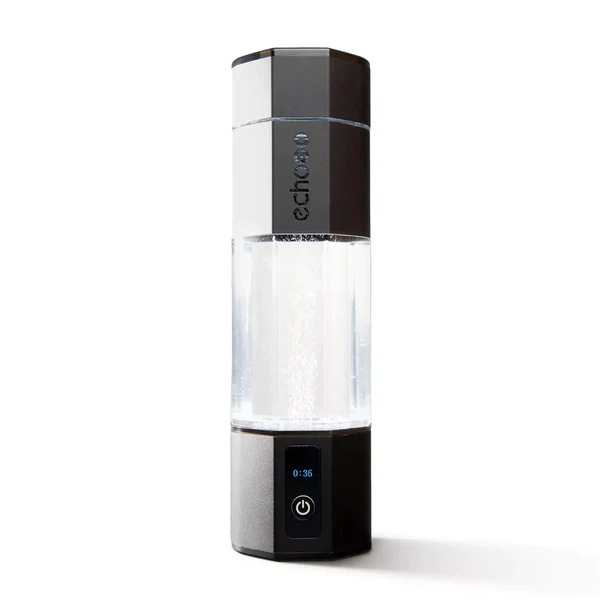
The Echo Flask, by contrast, is a one-time purchase you can use every day. You simply pour water into it, choose a cycle --- based on how high you want the hydrogen concentration --- and then you wait a few minutes. A current will run through the water, breaking up the molecules and creating molecular hydrogen.
The bottle design enables you to take it wherever you go, whether you need to grab groceries, go to the gym, or pick your kids up from school. You don't have to wait around in your kitchen for dissolved hydrogen. Instead, you can go straight to your car right after filling the bottle up and setting it. For hydrogen water on tap, you can get a hydrogen water machine for your home.
Get your own Echo Flask today!