


Here’s a polished, educational blog post that weaves in Echo’s filtration systems in a natural, value-driven way:
Hard vs. Soft Water Explained: What’s the Difference — and Why It Matters
You may not think much about the water coming from your tap — until you notice white buildup on your faucets, dry skin after showering, or dishes that never seem completely clean.
The culprit could be hard water.
Understanding the difference between hard and soft water can help you make informed decisions about filtration — and protect both your home and your health.
What Is Hard Water?
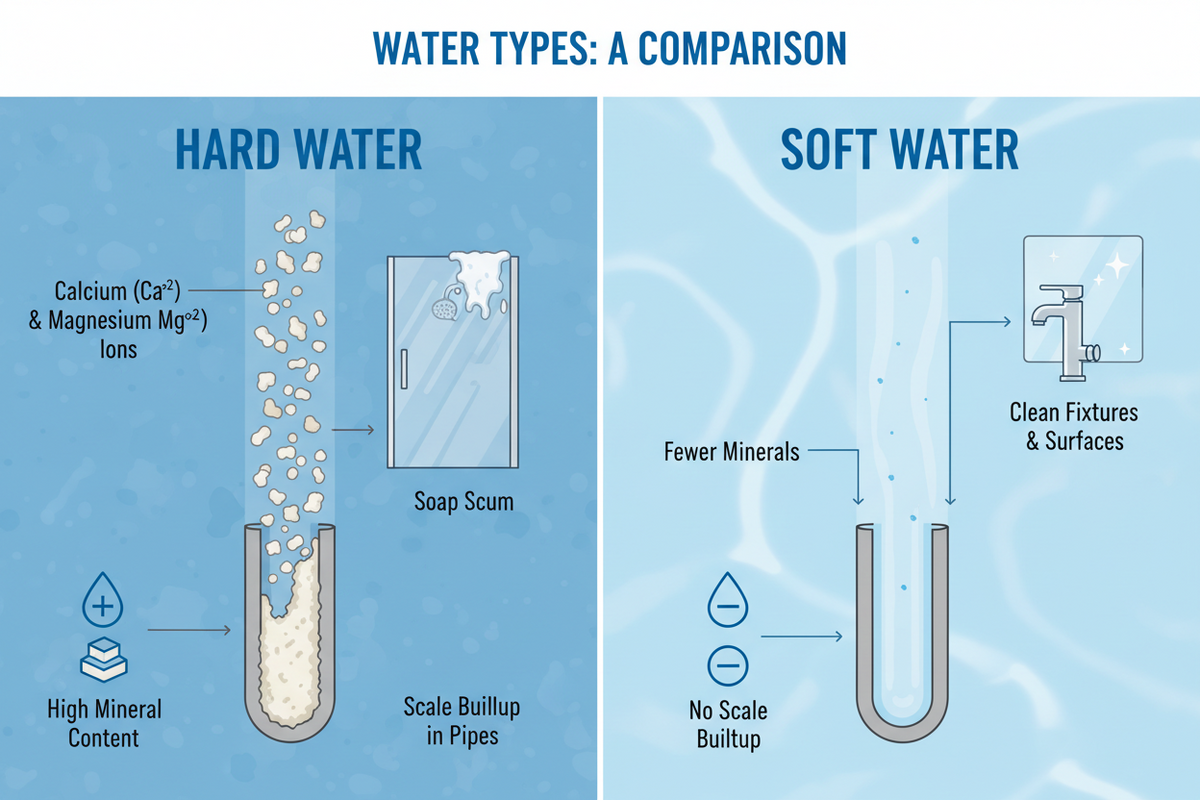
Hard water contains high levels of dissolved minerals, primarily:
-
Calcium
-
Magnesium
These minerals aren’t harmful to drink, but they can create noticeable effects throughout your home.
Signs You Have Hard Water:
-
White, chalky buildup (limescale) on faucets and showerheads
-
Soap that doesn’t lather well
-
Dry skin or dull hair after showering
-
Spots on dishes and glassware
-
Reduced efficiency of water heaters and appliances
Over time, mineral buildup can clog pipes and shorten the lifespan of appliances.
What Is Soft Water?
Soft water has low levels of calcium and magnesium. It allows soap to lather more easily and leaves fewer mineral deposits behind.
Many homes use water softeners, which typically replace calcium and magnesium ions with sodium or potassium ions through an ion-exchange process.
While soft water helps reduce scale buildup, it does not necessarily remove other contaminants like chlorine, sediment, heavy metals, or volatile organic compounds (VOCs).
That’s where filtration becomes important.
Hard Water vs. Soft Water: Key Differences
| Feature | Hard Water | Soft Water |
|---|---|---|
| Mineral Content | High calcium & magnesium | Low calcium & magnesium |
| Soap Lather | Reduced | Improved |
| Scale Buildup | Common | Minimal |
| Impact on Appliances | Can shorten lifespan | Helps reduce buildup |
| Contaminant Removal | No | No (unless paired with filtration) |
It’s important to understand that water softening and water filtration serve different purposes.
Do You Need a Water Softener, a Filter — or Both?
If you live in an area with high mineral content, a softener can help protect plumbing and appliances from scale.
However, if you're concerned about:
-
Chlorine taste or odor
-
Sediment
-
Heavy metals
-
Chemical contaminants
-
Overall water purity
A water filtration system is essential.
Many households benefit from a combined approach: softening for mineral control and advanced filtration for contaminant reduction.
How Echo’s Water Filtration Systems Fit In
Echo’s water filtration systems are designed to elevate water quality beyond basic softening. Whether installed under the sink or as part of a larger home solution, Echo systems focus on reducing common contaminants while preserving clean, great-tasting water for drinking and cooking.
Benefits of advanced filtration include:
-
Reduction of chlorine and unpleasant odors
-
Removal of sediment and certain heavy metals
-
Improved taste and clarity
-
Cleaner water for daily hydration
For those focused on wellness and performance, starting with properly filtered water creates a strong foundation. From there, some individuals choose to incorporate hydrogen-infused water systems to further elevate their hydration routine — but filtration remains the first and most important step.
Why Water Quality Matters More Than You Think
You interact with water every day — drinking it, bathing in it, cooking with it, washing your clothes and dishes.
Improving water quality can:
-
Protect your plumbing and appliances
-
Support healthier skin and hair
-
Enhance taste and hydration habits
-
Reduce exposure to unwanted contaminants
Whether you’re dealing with hard water scale or simply want cleaner, better-tasting water, understanding your home’s water profile is the first step.
The Bottom Line
Hard water and soft water refer to mineral content — but neither automatically means your water is fully filtered.
If your goal is cleaner, better-tasting water throughout your home, combining mineral management with high-quality filtration provides the most comprehensive solution.
Echo’s water filtration systems offer scalable options designed to help modern households take control of their water quality — from the kitchen sink to the entire home.
Because when it comes to health and home performance, better water makes a difference.

